
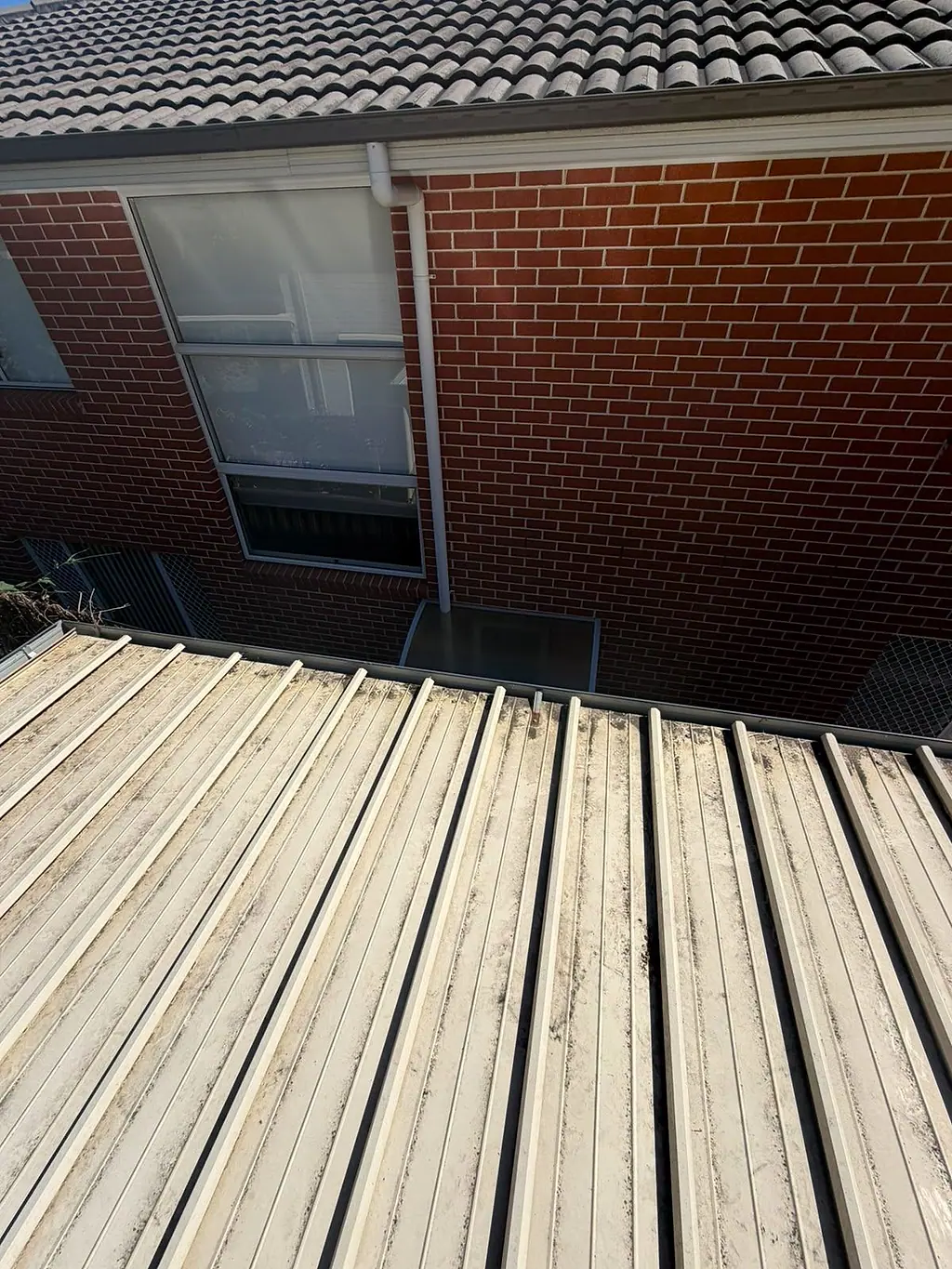
Soft washing is a low-pressure cleaning method. Instead of relying on force, it uses suitable cleaning solutions to break down moss, lichen, mould and algae, followed by a gentle rinse.
This page explains the method. For an overview of roof types and what our roof cleaning service covers, see roof cleaning.
What our roof soft washing service covers
- Application of a suitable cleaning solution at low pressure
- Dwell time so the solution can work on organic growth
- Low-pressure rinse
- Protection of plants and surrounds as appropriate
Benefits
- Lower risk of damage to tiles, coatings and flashings than high pressure
- Treats organic growth rather than just blasting the surface
- Suitable for many surfaces that should not be pressure washed
How we approach the job
Soft wash solutions are mixed to suit the surface and level of growth. We pre-wet and protect surrounding plants where needed, apply the solution at low pressure, allow it to work, then rinse. Some growth, especially lichen, continues to fade and wash away with rain over the following weeks.
Things to know before you book
- Soft washing is not instant for every type of growth; lichen in particular can take time to fully release.
- It does not repair physical damage, failed coatings or rust.
- Run-off is managed to reduce impact on gardens and drains.
What affects your quote
- Roof area and pitch
- Type and density of growth
- Access and safety equipment
Every property is different, so we quote each job individually. Send us a few details and photos if you have them, and we will come back to you with a clear quote.
Frequently asked questions
What is the difference between pressure washing and soft washing?
Pressure washing relies on high water pressure to remove dirt. Soft washing relies on cleaning solutions applied at low pressure, with a gentle rinse. Soft washing is gentler on delicate surfaces like roofs and render.
Is soft washing safe for my garden?
We take steps such as pre-wetting and rinsing plants and managing run-off. Let us know about sensitive plants, ponds or water tanks before the job.